Dojo Darelir, the School of Xenograg the Sorcerer

Tag: game design

Potions of Healing Restore One-Quarter of Maximum Hit Points

March 19, 2026

I recently read Healing Potions Are Dumb (and how I fix them), and enjoyed both its analysis and proposed solution. Then an old thought came back to me.

I never played the 4th edition of Dungeons & Dragons, but one concept from it always impressed me: Healing Surges. Specifically, that a Healing Surge restores one-quarter of a character’s maximum Hit Points. No more risk of bad dice rolls on healing spells.

That fixed proportion can easily be ported to apply to Potions of Healing in D&D 5e—in any edition, really, but especially in 5e where combat damage frequently outpaces healing abilities. This is a middle ground between the current rule and Nerdwerd’s maximalist option.

Backlinks

Converted Map of Wizardry: Proving Grounds of the Mad Overlord, Level 1

December 20, 2025

At long last, I have achieved a milestone on this pet project.

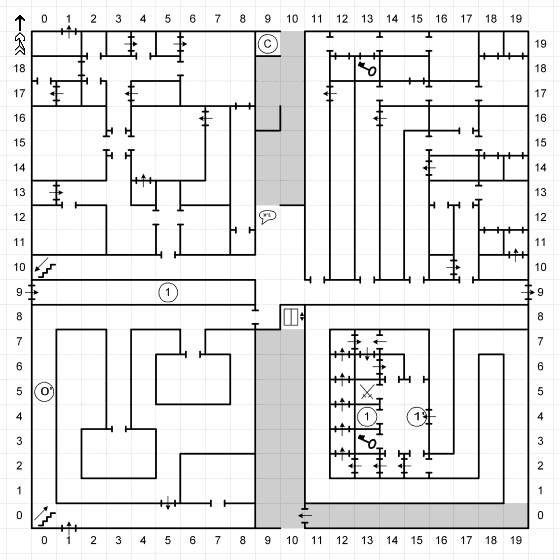
The original maps of the Wizardry: Proving Grounds of the Mad Overlord computer roleplaying game (CRPG) utilized a wrap-around technique to create the illusion of a larger area than just a 20-by-20 grid. Here is the original grid of Level 1:

original map for Level 1

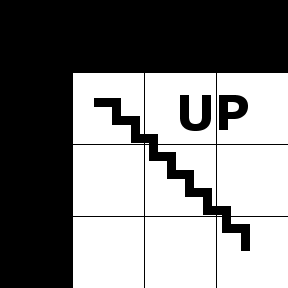
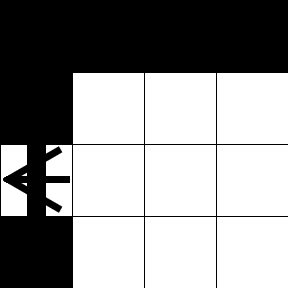
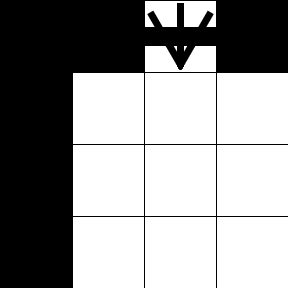
My pet project is converting these into maps rendered in HTML from a library of reusable images. These images are (with two exceptions) built as 4-by-4 grids. This allows for actual walls between adjacent areas. I am also “unrolling” all wrap-arounds.

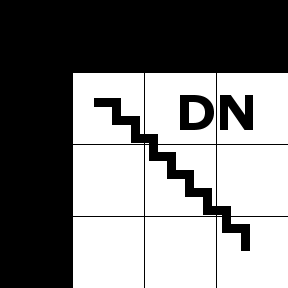
The first milestone was completing Level 1 to my satisfaction. I have flipped and rotated it to place the entry stairs in the upper-left corner:

Deranged, Murderous Thuggees

August 19, 2025

…I don’t think that every class should get a raft of soldiers. The cleric should get less soldiers and more zealots and believers, but probably this was a bit creepy for the 1979 company [that published Dungeons & Dragons]…. I can cheerfully allow an “evil” cleric player character to gain eighty or so deranged, murderous thuggees ready to konk women unconscious and burn them alive in monthly festivals…. This was done in reality, once; no reason it shouldn’t be done in a player’s imagination.

Food for Powder, Food for Worms – The Tao of D&D

White Dragon As Anti-Dragon

August 12, 2025

I have never been a fan of the chromatic and metallic dragons of Dungeons & Dragons, even when ignoring the Alignment aspect. Great variety but otherwise lacking both depth and need, in my opinion. Red dragons are the closest to traditional European mythology: flying fire breathers. That seems sufficient—with one exception.

Regarding Alignment, something recently reminded me that in Basic D&D, with its single Law-Neutral-Chaos axis, white dragons are Neutral. This makes them usable as mounts by non-evil people. A new idea then occurred to me: white dragons, being cold-based, would be the ideal counter to red dragons. Anti-dragons.

Perhaps not even true dragons, but a species created and/or bred by mortals or gods to protect against the true ones.

Anything Swords and Anything Items

July 16, 2025

Advanced Dungeons & Dragon’s Unearthed Arcana has an interesting magical item that I have never seen used: the Anything Sword.

screenshot of book page

As with several other things in Unearthed Arcana, this power comes with restrictions that make it almost not worth having. Ahem. 😀

This item has great potential for roleplay. So I am going to update it for use with D&D 5e. The biggest change I am making is removing the impermanence.

Anything Sword

Weapon (any sword), Legendary

This sword has a base type (e.g. short sword, longsword, et. al.) and a base +1 magical bonus. While drawn and held, you can use an action to have it transform into another magic sword. This is limited by the rarity of the new form:

  • A Uncommon sword, any number of times per day
  • A Rare sword, once per day (resetting at dawn)
  • A Very Rare or Legendary sword, once per day (resetting at dawn)

It may stay in its new form indefinitely. If still in a Rare, Very Rare, or Legendary form at dawn, it remains in that form but it also expends the appropriate usage for the new day. Note that the sword type counts as part of its form. For example, it cannot change from a Vorpal longsword to a Vorpal greatsword as the latter would be a second Legendary form.

This can be taken further.

Anything Item

Wondrous Item, Legendary

This item has the base form of any Uncommon magical item. While held, you can use an action to have it transform into another magical item. This is limited by the rarity of the new form:

  • A Uncommon item, any number of times per day
  • A Rare item, once per day (resetting at dawn)
  • A Very Rare or Legendary item, once per day (resetting at dawn)

It may stay in its new form indefinitely. If still in a Rare, Very Rare, or Legendary form at dawn, it remains in that form but it also expends the appropriate usage for the new day. Note that the item type/size counts as part of its form just like the Anything Sword.

So it can be all magical items but only one at a time, and only two big ones a day. Very powerful but I do not believe abusively so. Properly legendary.

FYI, the Elemental Blade of Fire is an Anything Item. Its base form is a Ring of Warmth. 😀

Magic Swords Use Their Wielders

April 9, 2025

Fighters are strong and resistant and overcome mundane opponents in mundane means. As they grow in skill, they become more resistant and more lethal. However, as lethal as they can be, they still are mundane and can’t harm enchanted beings.

Enemies that can’t be harmed are awesome. As in, literally, terror inducing. Because we mundanes have no way of defending ourselves from them.

For those, fighters need a magic weapon.

Crucially, magic weapons, and especially magic swords, are the most common permanent magic item in [Original D&D]. Magic swords can only be used by fighters, and magic swords are pretty much the best magic weapon in the game: beyond giving the capacity to hit magic beings, they often give extra powers, like detection of invisible or magic, or even more, which are incredibly useful and not easy to come by (at least they require casters to spend precious spell slots).

Magic swords also have the habit of having intelligence and big personalities and taking sides in the Eternal Struggle between Law and Chaos. They can also possess their fighter, and shift from being an empowering tool for the fighter into a master for the fighter, their body and limbs mere tool for the Sword.

This might seem like a douche move. However, these swords are quite the equivalent of having a Faustian deal with the devil: great power comes at a great cost. Sure, they lead you to gems, and let you vanquish vampires, but what do the Swords ask in return?

And the Faustian deal usually generates buckets of solid, engaging drama at the table: for example the sword can force a noncompliant fighter into giving itself away to a fighter more worthy of the sword mission, and more compliant. If you want to keep the sword, you need to make the sword want to keep you.

So when you find an intelligent magic sword in a dragon trove ask yourself what kind of reckless sucidal action the sword must have forced on the fighter wielding it. The sword is in the dragon hoard because either it forced the fighter into fighting the dragon, or it let the fighter believe it could.

Magic swords use their fighters to leave a trail of death until they lead their own fighter to death. Then they lay unused in a hoard until their new owner is killed by a fighter. And the trail of death can start again. And again. And again. And again, until the timeless magic sword, and its unquenchable bloodthirst, is no more.

Good luck with that. Magic swords are much more resilient than the countless arms that bear them. Beside dragonfire and powerful magic, they have little to fear.

D&D Magic Swords are awesome as the creatures they can harm. As in, they inspire terror. Not only when facing them, but also when wielding them.

Because, mostly, what fighters do to fight the supernatural is wielding supernaturally angry steel that has a proven history of leading previous bearers to death.

A few disordered thoughts on writing magic, starting from a detour on magic swords – Lost Pages

Combat Bonuses For (Nonmagical) Weapon Quality

April 8, 2025

When you get a +1 sword, you don’t just get a sword that does more damage and hits more often. In D&D, this sword is inherently magical – the enhancement is the result of literal magic, as opposed to superior craftmanship. And that strikes me as really, really weird. Like, I was reading this series of posts over on a Collection of Unmitigated Pedantry (super cool blog btw), and it seems like there was quite a range of possible qualities when making and finishing a sword. There are many fine considerations that go into making a predominantly metal weapon. What kind of iron and steel are using? How did you laminate the differing types of steel to make best use of their different material qualities? How do you finish the blade?

In a pre-capitalist society, there’s a lot of room for smiths of differing ability to be making dogshit swords or really really good ones, depending on region, price and demand, and I feel this isn’t represented very well in D&D rules. Like, okay, there are masterwork weapons in 3e but to be honest those rules kind of suck. Most of what makes a weapon special is magic.

What galls me in particular is the effect this has on internal logic in low-magic worlds. Like, okay, magic is rare, except every adventuring party has a wizard AND every every fighter past a certain level has a magically enhanced sword. And you could always just say "No magic swords" but in D&D this is the same thing as saying "No +1 swords." Which is pretty fucking boring for the sword-wielding members of your party.

So fuck it. The new enhancement scheme is +0 to +3 non-magical swords, to reflect differing abilities of smiths.

So a regular +0 sword is basically pure iron, or steel but made by someone who doesn’t know how to work steel well. It’s probably worse than a bronze sword, because pure iron is actually worse for weapons than bronze. Mercenaries and very rural or isolated nobility or the nobility of less metallurgically advanced societies usually carry these around. People who shouldn’t be able to afford swords, like adventurers or peasants, but somehow inexplicably have them will only have +1 swords. If you pull a sword out of a dungeon, or get it from salvage, it’s probably going to be a +0 sword because of long abandoned maintenance.

A +1 sword represents a smith who knows what the fuck they’re doing making an honest to god steel sword. It’s still rudimentary, not heavily layered, but its superior metallurgical quality still carries through. A knight from a kingdom’s core regions, well-off or high ranking professional soldier, or successful adventurer is going to have a +1 sword.

A +2 sword is getting into the real good stuff. This is the best work of the top tier of smiths currently alive. These are always commissioned, usually for richer nobles and kings. Actually, +1 swords are commissioned too, but commissioning a +2 sword is a Big Deal. A +2 sword is the best any adventurer should ever expect to get. +2 swords usually have names, and if they are wielded by someone famous, they will become famous as well.

A +3 sword barely even qualifies as a sword. Most people who own them think they’re too precious to risk actually using in a battle. It’s really more like an art object. If your players recover one of these, and decide not to use it, it should count as treasure for XP and stuff. Longstanding dynasties might have one of these, passed down from generation to generation, and they’ll sometimes wave it around before battle to motivate their troops. All of them have names. In my campaign, they’re all named after battles the Romans lost, like Carrhae, Cannae, Ebrittus, Caudine, or after their enemies, like Volsci, Aequi, Samnite, Alaric, and so on. The people who made them have names, and are legends unto themselves. A smith capable of making such a blade is trained once every half-millennium. Or maybe they’re like, a cyclops or something.

Note that this only applies to swords, in a sword-centric culture. Around here, the best a spear can be is +1, to account for better materials. This also helps keep swords distinct, as I tend to have a lot of different weapons In foreign places, maybe they’re really obsessed with axes or spears, and I guess all of this can apply to those weapons instead.

I also chose +3 because my campaign is supposed to have some pretty hard caps on to-hit bonuses. The highest to-hit bonus anyone can reasonably get with a +0 weapon is +4, for example. You can easily do the same thing with a traditional +5 scale.

"But wait!" You protest, "now none of my fighter characters have cool magic weapons! This blows!" Not so. I love magic swords. I just don’t see why they have to be +X or whatever. In fact, I think this kind of has the result of making magic weapons lame. To illustrate:

"You recover from the demi-liches a mighty sword, clearly of magical provenance."

"Holy shit, awesome! What does it do?"

"Um, it gives you +4 to hit and to damage."

Not exactly titillating, is it? But by tying sword enhancement to magic, I think this sort of play ends up being encouraged. The benefit of a magic sword should be the magic.

You could enchant a +1 sword to be magic, but most of these are being dug out of treasure piles of the gullets of scary monsters, so they should probably be +0. Or you could enchant a +0 sword to have +1 to-hit and damage, but that’s pretty boring and should require, like, a wizard that inexplicably has professional level knowledge of blacksmithing techniques. Sort of like this twitter thread I saw recently where a guy talked about how he (no joke) went to clown college and worked as a clown before pursuing a PhD. Incidentally, the clown stuff paid better than the PhD. But yeah, a wizard who can just make a +1 sword for you is going to require that specific melding of expertise in vastly different areas… if you want a +1 sword it’s way easier to just find a competent smith.

Mostly, magic swords should be weird or have cool but situational effects. Check out this (also a super cool blog especially if you like glog stuff) generator, except, you know, leave out the +1 stuff. I’m also cracking up imagining an intelligent sword that’s +0 and kind of insecure about it. Come on, that would be hilarious.

+3 Swords – Profane Ape
Guns For Xenograg, Part 3: On Ray-guns

January 16, 2025

In the prior blogpost, I looked at increasing reload time to slow down rate-of-fire. Now to look at reducing the number of shots per load. Returning to the flintlock as starting point, the lowest number of shots before needing to reload is one. What if we retain the modern, fast reload time?

This is actually very applicable to ray-guns. Energy weapons require power cells which are more analogous to magazines than individual cartridges. Modern ergonomics has the bullet magazine in the pistol grip. A convenient button press plus gravity removes the empty magazine, and your off-hand has the new one ready to insert. My change here is to have a magazine-shaped power cell which is empty after a single shot. Reloading only take a couple of seconds, but has to be done frequently. No dual-wielding here, either.

The third “dial” suddenly becomes the limiting factor: sustained fire depends upon the number of power cells readily available—that you can carry. The return of bandoliers!


Still a problematic rate of fire, but the total amount of shots someone has available is lower than speed-loaded revolvers. Also unlike revolvers, this design cannot fire in a rapid burst at need.

This latter design fits Xenograg’s sonic disrupter weapons. It also answers why the Drachen Walde revolver is still his everyday sidearm: much lower ammunition encumbrance.

Guns For Xenograg, Part 2: the Lethality Problem

January 16, 2025

While the flintlock and revolver pistols mentioned in the prior blogpost have been fully articulated for roleplay by me, the disrupters never have been. Specifically, the number of shots possible before needing to reload the weapon. This is important for the following reason:

The massive impact that guns bring to roleplaying games (and real life, but nevermind that now) comes from the high rates of fire possible in modern firearms.

Thanks to modern bullets, magazines, and speed-loaders, even a semi-automatic or revolver gun generates a sustained rate of fire far in excess of any other missile weapon. This results in high lethality in gun combat. Unless your game milieu is explicitly about that, it is disruptive to roleplaying. To reduce that lethality, rates of fire need to be drastically reduced.

Sustained rate of fire (SROF) comes from the combination of three factors:

  1. Number of shots before needing to reload
  2. Time required to reload
  3. Number of reloads readily available

Adjusting any one of these “dials” will change SROF. For simplicity, I will confine the remaining discussion to pistols. For my first adjustment, I will draw upon the historical evolution of gun development for inspiration. The focus is on reload time.

For 200 years, the best gun technology was the flintlock. At best, it could maybe fire four times a minute. This was due to it being laborious to load and that for only a single shot. I cannot imagine a high-tech weapon being that difficult/slow to reload, though.

The invention of the revolving cylinder in 1836, C.E., predates the invention of the pre-assembled bullet cartridge. A revolver gave its owner 5 (later 6) shots before needing to reload, but the reload process was nearly identical and just as laborious as with the flintlock—now multiplied by that same 5 or 6 count of bullets. The new combatant type called pistoleers carried two or more revolvers because reloading an empty one would take several minutes; better to holster the empty gun and draw another loaded one. Pistoleers frequently held a revolver in each hand. Revolvers with replacable cylinders were developed to speed up reload time (some), but at the cost of dual-wielding.

Even at this point in history, such a rate of fire is going to be problematic to roleplaying. Less sustainable, at least; knowing you have a fixed amount of loaded ammunition does make one more deliberate in their use. That is only a soft constraint.

The next blogpost will look at focusing upon the first dial.

A Quarterstaff Is a Polearm

October 9, 2024

A quarterstaff is a polearm. It is a two-handed weapon. RPG wizards should not be proficient with it.

A wizard’s staff is, mechanically, a club.

There Are Only Five Weapon Sizes

September 10, 2024

I, too, have spent countless hours on making D&D combat more to my liking. Like many I have come to appreciate simpler, more elegant mechanics.

While I have not yet found the right combination of attacks versus defense bonuses, I have “solved” the weapons list. Emphasizing the abstract design of D&D combat, I see only five weapon sizes—really just three:

Weapon Type/Size Usage
light/short one-handed only
medium both
heavy/long two-handed only

New Magical Item: Gauntlet of Lances

August 10, 2024

I have lately been pondering cavalry lances in D&D. I never see them used. (I never see mounted combat, either, but nevermind that now.) With a charge attack scoring double damage, a lance is the most powerful melee weapon. Yet no one uses them.

Although there has never been a rule for it, one reason I never used a lance was because they usually break—are supposed to break. A Player Character needs to carry more than one. (Missed opportunity to have a person-of-hench as a squire.)

A magical lance that does not break is a danger to its wielder. It should be impermanent in the same way magical arrows are. (You should find 1d4 lances +1 in a treasure trove. 😁)

My pondering led me to the conclusion that the best application of magic here is overcoming the need for spare lances; all my Player Character truly wants is another, unbroken lance. A lance that magically reassembles after breaking is too fanciful for my tastes. Conjuring a new lance is the simplest solution. Since the lances are not the permanent magical item, something else needs to perform the conjuring.

And so I give you: the Gauntlet of Lances!

Gauntlet of Lances

Wondrous Item, Rare

A gauntlet for the right hand that creates in its grip a nonmagical wooden lance (of appropriate size).

Letting go of the (presumed broken) lance causes all pieces of it to disappear.

Game Master’s discretion as to what level of action is required for a wearer to conjure a new lance.

Hit Points As a Resource?

July 10, 2024

A few weeks ago, we talked about Stamina points as a resource players can spend. Today, we’re going to look at a different method, namely burning hit points for effect in more heroic games.

One of the oldest topics of D&D is what Hit Points actually represent, and while it’s inconsistent and imperfect, it’s generally accepted that it’s a vague mix of health, luck, endurance, luck and general good fortune.

Under these rules, characters can elect to sacrifice hit points to obtain rerolls and other benefits. By definition this will mainly benefit more experienced characters but it serves to give players another, mechanical, escape valve in a bad situation and it presents an interesting decision. While losing a hit point is almost always preferable to losing a saving throw, it will still leave you worn down by the end of the adventure.

These all reflect things that can come about through extreme efforts, whether pushing yourself physically or presenting a supreme effort of will.

Only one option from the below list can be selected in any given combat round. DM’s discretion if they must be spent before or after actions are resolved (in the case of rerolls)Please note that you could assign higher costs to some items. I elected to keep it simple.

By spending 1 hit point, a player may do any of the following:

  • Make an additional melee attack.
  • Move an additional 20% of their movement rate.
  • Leave a combat without taking a “free swing” from the enemy.
  • Reroll a failed saving throw.
  • Take a hit for a comrade in the same melee (or adjacent if missile fire)
  • Reroll a failed thief skill.
  • Act before any other characters in a combat round (and simultaneously with characters that magically act first)
  • Negate the effects of surprise for 1 combat round.
  • Inflict 2 additional damage with a successful hit (melee or ranged).
  • Reroll the damage dice or healing dice for a spell.
  • Reroll any skill or proficiency check.
  • Get one clue from the GM regarding a puzzle or situation.
  • Reroll a reaction roll.
  • Negate the effect of a critical hit.

Too radical? Not radical enough? Other things that should go on the list? Let me know in the comments!

Hit Points As a Resource? – The Daily OSR

Alas, that blog is gone, and the Internet Archive does not have a copy of this blogpost. I have copied the entire text here for posterity.

The Iliad as Source Material

July 10, 2024

As I read more classics I find that different mythologies seem to present entirely different worlds. The world of the Iliad, for example, is so different in certain ways from that of the Irish Fiona, that the systems which run these mythologies would have to be in some ways intrinsically different. For example, the handling of magic. In the Irish World of the Fiona, magic is imbued into the very living substance of the universe, and the question is how easily one can migrate between our world and the Otherworld (tir na nog). In the Iliad, however, there is no sense of humans transporting between worlds, but rather it is the Gods who step down from on high and invade ours. Rare is the hero who enters the Otherworld in Greek Myth. Common is he who does so in the Celtic Mythos.

Were I to create a world for running an “Iliad” game, that world would have Gods of non-infinite powers, who act directly in the game, who can be wounded by mortals (such as Diomedes, who causes Aphrodite to bleed the famous Ichor of the Gods), and who scheme and connive their way throughout the entire fabric of the story. In fact it is a story about the competitions and victories of the Gods, and almost incidentally about the Heroes. This world would require strong rules for handling God-like Powers, and for it to be reasonably sporting, the Player Characters would pretty much need to be Heroes and the children of the Gods. Conversely, you could play it low level, in the same world, where the Player Characters come within approximate range of the Heroes, get occasionally swept up (dangerously so, I should think) in their Quests, and perhaps return to the village either a richer or wiser or stronger somehow. Either way, it would be an interesting world, but the rules would have to support it.

On the other hand, when we look at such fairy tales as Kil Arthur, the son of the King of Erin, I think we’d find that a different set of rules would be required. Or if not the rules themselves, at least the parameters of those rules in which our game would operate. It could certainly be played at almost any level, as what influence the Gods may have in these stories, there is little obvious to tell. An impulse to go here, a ship perhaps sent on the wind to a magical island, or the appearance of a giant over the edge of a hill…none of which seem named to occur by the dictate of any particular deity as in the Greek mythos. No, rather it is the Character who has chanced to enter, perhaps, the Otherworld, and knowingly or otherwise, has entered upon some quest. The mood is mysterious and vague and clouded, unlike the Greeks, whose tales were starkly brilliant in their divine clarity. We know each of the Gods and all of their motives, arguments, stratagems, and follies with the Greeks.

I wonder if anyone here has attempted to put these kinds of worlds to the test in their RPGs, and how did you go about GMing for it, and how did it work out?

The Iliad as Source Material – Literary RPG Society of Westchester

Alas, that forum is gone, and the Internet Archive does not have a copy of this post. I have copied the entire text here for posterity.

Because There Are More Spells Out There

July 6, 2024

…So, imagine this:

Whatever iteration of the game you are playing, the 1st level Magic-User spells are the entire syllabus of known spells.

Fly? You wish. Fireball? Who can shoot exploding balls of fire; this is magic, sonny, not comic-books.

Of course, everyone knows that there are, in fact, other spells out there. Every first-year sorcerer has read that bit of Laconius where he mentions the Miraculous Mantle of Obfuscation, which renders the user invisible, and the intemperate uses to which he put it in relation to the Witches’ Coven of Outreterre Or known the frustration of studying that antique blabber-mouth Quinquarine, who, over the course of several volumes, promises to reveal the formula obscurely referred to as The Perambulatory Revelator of One-and-All, only to have no copies of the final volume survive the bonfires of the Irenian Orthodoxists. Or stared at the great tapestry at Biancule, depicting the turning of the invasion of the Mauvrian Hordes, and wondered what incantation allowed the fabled archimagus Villondro to enmesh the Mauvrians in gigantic spider-webs?

So, of course there are more than just these twelve spells. That’s why you are crawling down a hole in the ground with a party of cerebrally-challenged bravos, cut-purses, and roustabouts, facing death a hundred times over in the form of goblins, traps, and pneumonia, instead of staying in a nice cosy manse somewhere, casting Charm Person over and over for a hundred crowns a pop. Because there are more spells out there.

And whoever finds even one of them, is going to be star among the thaumaturgical-set. Seriously, people are going to be hitting you up right, left, and center for just a peek at your grimoire; the grimoire that contains the only known copy of Ariste’s Vertical Realignment in the world (even if some slack-witted copyist wrote it down as Levitation. But, hey, that error kept the thing lost all these centuries ’til you found it, so be nice to the guy). You now become famous as “So-and-So the Levitator” and anybody who needs something vertically-realigned has to come to you; either to pay for the privilege or to try and steal your spell (recall, in this context, the bit in The Dying Earth where Turjan crashes the chambers of Prince Kandive)….

Gedankenexperiment: Vancian Rarity – The Wheel of Samsara

Modular Armor System in Wizardry CRPG

July 3, 2024

Unlike Dungeons & Dragons, some early CRPGs (e.g. 1981’s "Wizardry: Proving Grounds of the Mad Overlord" and 1985’s "The Bard’s Tale: Tales of the Unknown") had a modular armor system. Helms and gauntlets provided a defensive bonus. Helms could also have a magical bonus. Items like shields and gauntlets had more than one type, each with a different defense value.

Here is a summary of the system from Wizardry I, which is closer to D&D regarding character classes:

Armor Defense
Bonus
Maximum
Magical
Bonus
Class Limitation
Robes 1 0 best available to Mage
Leather Armor 2 2 best available to Thief
Chain Mail 3 2
Breast Plate 4 3 best available to Priest
Plate Mail 5 3 martials only
Small Shield 2 3 best available to Priest, Thief
Large Shield 3 3 martials only
Helm 1 2 martials only
Copper Gloves 1 0 martials only
Silver Gloves 3 0 martials only
source: tk421.net

Starting Armor Class is 10. The lowest (descending system) AC possible is -10.

Priests in Wizardry cannot wear helms thus enabling the combat primacy of the martial classes. This inspired the blogpost, Armor Class Penalty For Not Wearing a Helmet, and the taboo that a Demodarid sorcerer’s head must be bare to perform magic.

Zero-Level Characters, Part 6: Advanced D&D 2nd Edition

May 2, 2024

As mentioned in Part 2 of this series, my knowledge of the D&D editions I grew up on is not actually complete. This is especially true of Advanced D&D 2nd Edition (2e).

There is a now-old jibe about how no one has read the 5th Edition Dungeon Masters Guide (DMG) because most DMs (at that time) were older players who had played prior editions. The idea of “rereading a book you already know” caused issues because of rule changes. This is old news to me as I never read the 2nd Edition DMG when it came out.

As orisons were introduced in 2e Players Handbook—which I did read at the time—I decided to check the 2e DMG to see if it covered zero-level characters. Indeed, it did: more than half a page! Here is the introduction:

The great mass of humanity, elf-kind, the dwarven clans, and halflings are 'zero-level' characters. They can gain in wisdom and skill, but they do not earn experience points for their activities. These common folk form the backbone of every fantasy world, doing the labor, making goods, selling cargos, sailing oceans, building ships, cutting trees, hauling lumber, tending horses, raising crops and more. Many are quite talented in the various arts and crafts. Some are even more proficient than player characters with the same training. After all, zero-level characters earn their livings doing this kind of work; for player characters such proficiencies are almost more of a hobby.

It goes on to cover Ability Scores and Proficiencies (weapon and non-weapon) which I am skipping here. It is worth reviewing the section on Hit Points:

The majority of people have from 1 to 6 hit points.... Manual laborers: 1d8; Soldier: 1d8+1; Craftsman: 1d6; Scholar: 1d3; Invalid: 1d4; Child: 1d2; Youth: 1d6

Quite a range depending upon vocation. Basic D&D only had two categories: Normal Man (1d4) and Man-at-arms (1d4+3).

Plate Armor Should Be Not Just Expensive But Restricted

April 6, 2024

I have previously posted about how plate armor should be much more expensive than listed in most RPG equipment lists. While this will make its acquisition by Player Characters more difficult, it is neither the sole nor primary reason they should rarely have it: ownership would be restricted by any organized government to trusted individuals. In a word, loyalty. Men-at-arms who have sworn to serve that government and not act contrary to it.

PCs must earn such trust, and give oaths of loyalty, before being granted access to such critical military technology.

There are other ways for PCs to achieve “heavy armor” equivalency—say, wearing two “medium” armors atop one another—but that has (and should have) obvious disadvantages.

Zero-Level Characters, Part 5: Rogues

March 10, 2024

As I commented on Men Who Lived Deeper in the Shadows, in a fantasy roleplay campaign world, most people are rogues. I first got this idea from the blogpost, Hit Me Baby One More Time, and its description of 1st-level Thieves in B/X (e.g., 1981 Basic Edition D&D):

…At 1st level the thief looks almost like any other urban Normal Man…but it’s just an act. Even at 1st level he has abilities that set him apart from the general populace. The thief’s cunning and grace makes him an excellent combatant compared to the Normal Man (better attack matrix), and his wit, luck, and powers of observation make him immune to hazards that the NM would suffer (better saving throws)….

Working from that, a zero-level Rogue basically is a Normal Man; they do not have those abilities that set 1st-level’s apart. We also arrive at this conclusion by process of elimination: a Normal Man has neither the cantrip-only magic of the zero-level caster classes nor the improved combat ability of a zero-level Fighter.

All this leads me to a conclusion: as Rogues dominate the zero-level “tier”, they should likewise at 1st level.

People Are Cheap, Things Are Expensive

February 20, 2024

Gamemasters who set their campaigns in any pre-industrial period frequently fail to understand that everything is handmade—including tools and the tools to make tools. Even in places with high population, the vast majority are primarily engaged in producing food. The number of artesans in a population is always low. Manufactured items could be stockpiled in great amounts, but that took much time (i.e., years) and dedicated effort—usually at the expense of other things being deprioritized.

Artesans can command high wages, but that is far outstripped by the value of what they make. Their small numbers get lost in the sea of poverty-wage labor. What they have made outlives them—possibly by centuries, sometimes.

Even animals are worth more than people. A dead cow is a greater loss than that of a peasant, let alone a horse. Sad but true.

In such a society, people are cheap while things are expensive. Among other things, the equipment lists in games should better reflect this.

For further reading: